
What Is a Product Taxonomy?
A taxonomy is a classification system — a structured way of organizing things into categories so they can be reliably found and compared. Think of it like the organizational system in a well-stocked library: every book has a subject, a genre, a section. Without that structure, finding what you need is guesswork. With it, discovery becomes fast and reliable. Acelab’s taxonomy does the same thing for building products.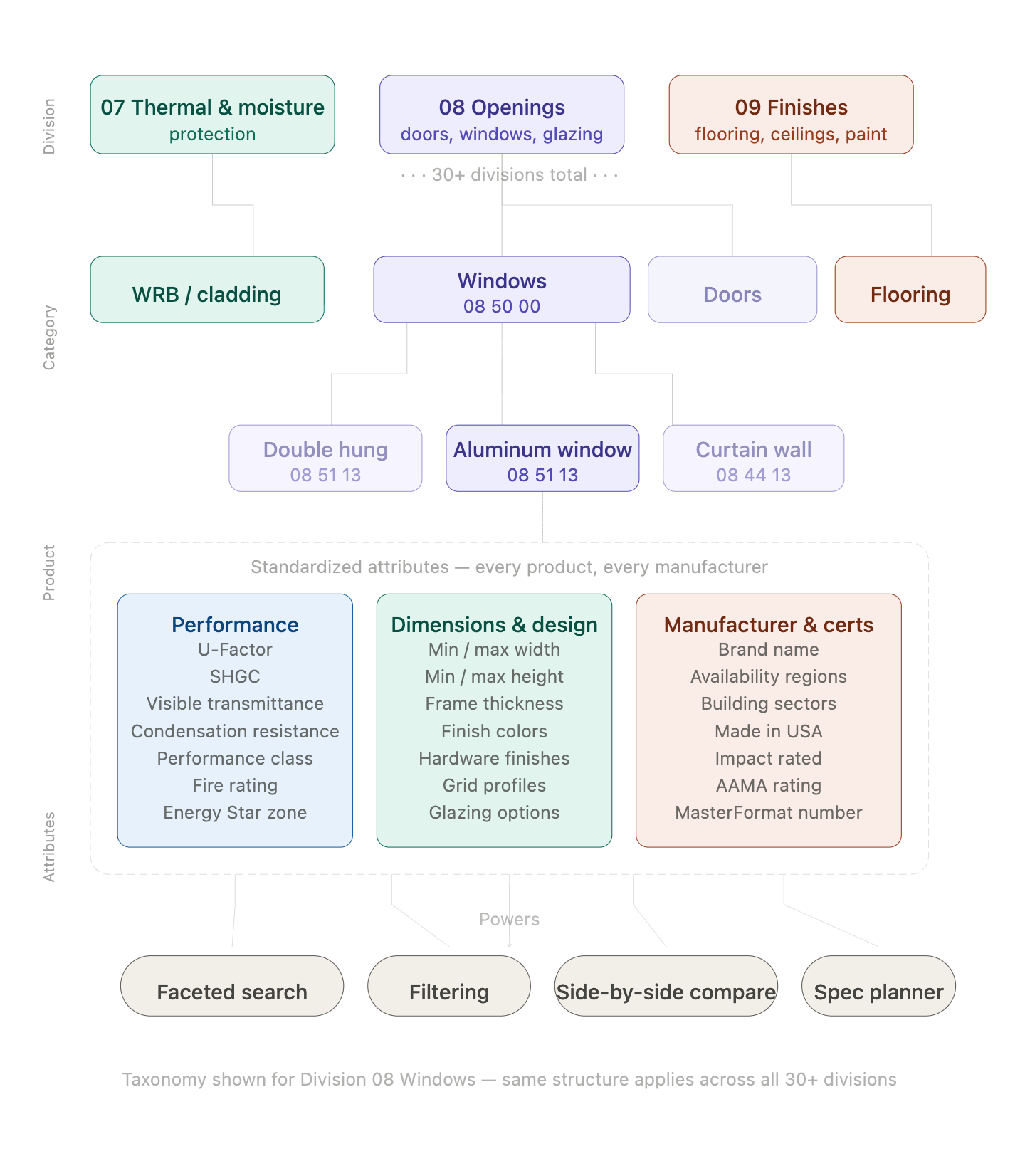
How Acelab Classifies Products
Every product in Acelab’s database is organized using a hierarchy based on the MasterFormat standard — the industry’s established system for categorizing construction products and materials. The hierarchy has up to four levels:- Division — The broadest grouping, aligned with MasterFormat divisions (e.g., Division 08 – Openings)
- Subdivision — A more specific product type within a division (e.g., Windows)
- Group — Further refinement within a subdivision
- Subgroup — The most specific classification level
Standardized Product Attributes
Classification is only part of the picture. What makes Acelab’s database genuinely useful is the depth and consistency of product data across every listing. For each product, Acelab standardizes the data into a set of defined fields across several categories, including but not limited to:Performance Data
Measurable, comparable values — the kind of data that drives specification decisions. For windows, for example, this includes fields like U-Factor, Solar Heat Gain Coefficient (SHGC), Visible Transmittance (VT), Condensation Resistance, Performance Class, Performance Grade, and Fire Rating.Dimensions
Minimum and maximum width, height, and thickness — structured so they’re filterable and comparable, not buried in a PDF.Design Options
Finishes, hardware finishes, glazing options, grid profiles, and other configurable attributes, structured so architects can filter and compare options at a glance.Certifications and Compliance
Fields like Energy Star zones, impact ratings, and AAMA ratings are standardized so they appear consistently across products — making it easy for architects to verify compliance for their project requirements.Manufacturer Information
Company name, website, availability regions, building sectors served, and manufacturing location. This structure is consistent across product types. Every manufacturer’s products are held to the same data standard, so no single brand gets an advantage from unstructured or marketing-heavy listings.How This Powers Search and Filtering
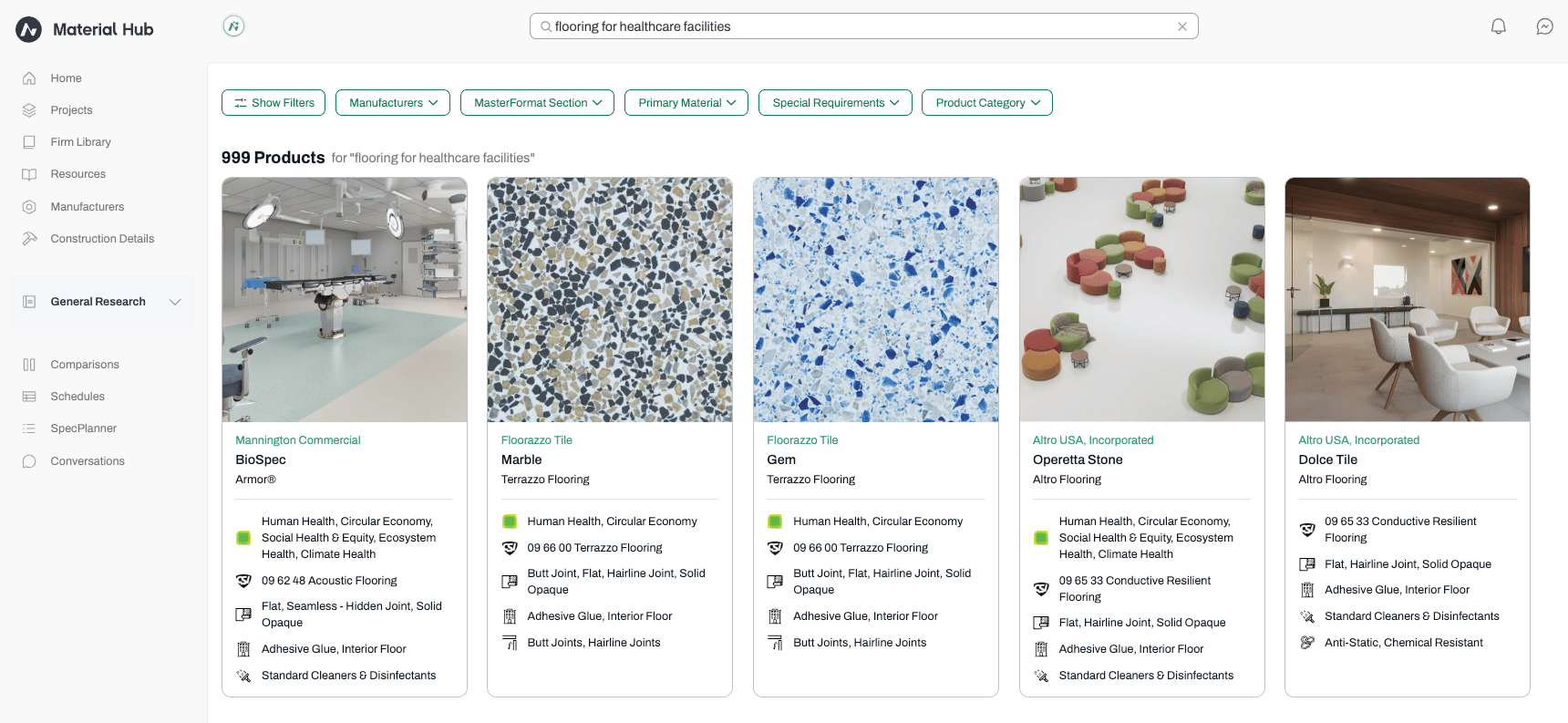
When architects search on Acelab, they aren’t just searching by keyword. The platform uses the taxonomy and standardized attributes to power a faceted search — a system of filters that narrows results based on structured data. At the top level, architects can filter by:- Category — Mapped to the taxonomy
- MasterFormat Section — Aligned with their specification structure
- Manufacturer — To browse within a brand
- Special Requirements — Project-specific criteria, such as sustainability
- Primary Material — For material-driven searches